
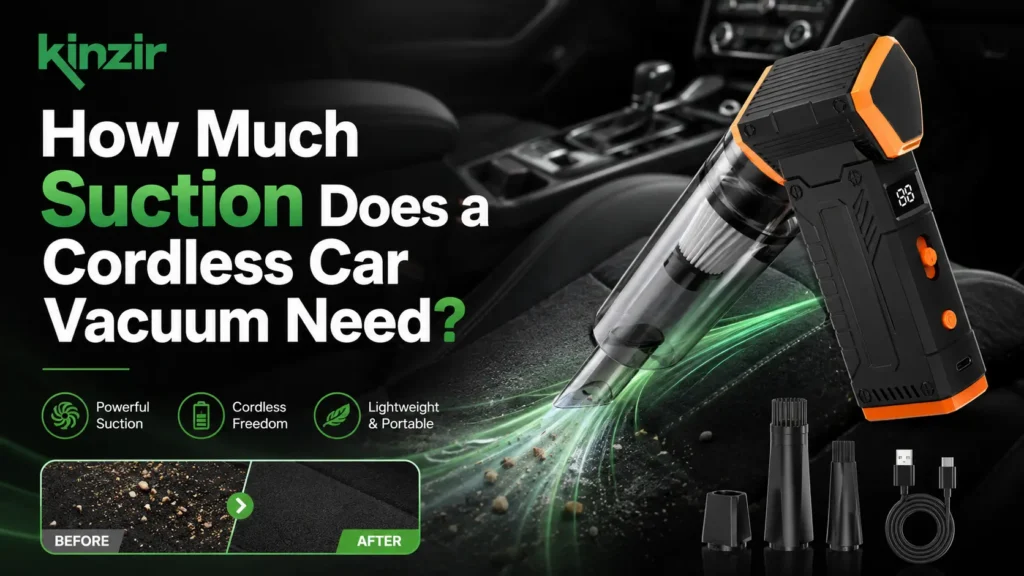
Most drivers need a cordless car vacuum with 8,000-12,000 Pa of suction. This range is suitable for routine cleaning of dust, crumbs, loose dirt, seat gaps, floor mats, and cup holders.
A model rated at 12,000 to 16,000 Pa is a better fit for sand, pet hair, textured carpets, and dirt pressed into fabric seats. Vacuums rated at 16,000 to 20,000 Pa are suited for deep cleaning and stubborn debris, though their highest setting may shorten battery runtime.
The Pa number matters, but it should never be the only specification used to judge a car vacuum. Airflow, motor design, nozzle shape, filter condition, battery output, and dust cup sealing can change how the vacuum performs inside a real vehicle.
Quick Suction Guide for Cordless Car Vacuums
| Suction rating | Suitable cleaning tasks | Best suited to |
|---|---|---|
| Below 6,000 Pa | Fine dust and loose crumbs | Occasional touch-ups |
| 6,000 to 8,000 Pa | Dashboard dust, cup holders and leather seats | Small cars and light cleaning |
| 8,000 to 12,000 Pa | Crumbs, loose dirt, seat gaps, and floor mats | Regular car interior cleaning |
| 12,000 to 16,000 Pa | Sand, pet hair and fabric upholstery | Families and pet owners |
| 16,000 to 20,000 Pa | Embedded dirt and stubborn carpet debris | Deep cleaning and detailing |
For most buyers, 8,000 to 12,000 Pa offers the best balance of cleaning ability, runtime, size, and weight.
What Does Pa Mean on a Car Vacuum?
Pa stands for Pascal, a unit of pressure. Car vacuum specifications often show the rating in Pa or kPa.
One kilopascal equals 1,000 Pa:
- 8 kPa equals 8,000 Pa
- 12 kPa equals 12,000 Pa
- 20 kPa equals 20,000 Pa
A higher Pa rating means the vacuum can create a stronger pressure difference at the intake. This helps lift dirt from seat seams, carpets, floor mats, and narrow gaps.
Pa measures pressure rather than the full cleaning result. A vacuum may show a high rating during a sealed laboratory test but lose suction once air passes through its nozzle, dust cup, filter, and internal ducts.
Read Kinzir’s detailed guide to kPa ratings for cordless car vacuums for a closer look at pressure, motor speed, airflow, and battery runtime.
Is 8,000 Pa Enough for a Car Vacuum?
Yes, 8,000 Pa is enough for normal car maintenance.
It can pick up:
- Dust from dashboards and consoles
- Crumbs from seats and cup holders
- Loose dirt from leather or vinyl
- Small debris from storage compartments
- Surface dust from floor mats
- Dirt from door pockets and seat gaps
An 8,000 Pa vacuum is a practical choice for drivers who clean their vehicles often. Dirt is much easier to collect before it becomes pressed into carpets or upholstery.
Lower suction can give longer runtime and a lighter product body. This range works well for compact cars, office desks, keyboards, and daily touch-ups.
Is 12,000 Pa Good for Car Cleaning?
A 12,000 Pa cordless vacuum is a strong all-around choice for car interiors.
It can handle routine debris plus:
- Sand on floor mats
- Hair on fabric seats
- Dirt in carpet fibers
- Food particles beneath the seats
- Dust inside narrow console gaps
- Small gravel and dried outdoor debris
At this level, nozzle design starts to make a clear difference. A crevice nozzle concentrates suction in narrow spaces. A brush attachment loosens dirt and hair before the vacuum pulls it into the dust cup.
A washable filter and well-sealed dust cup help keep the suction steady during use.
Do You Need 20,000 Pa for a Car Vacuum?
Most drivers do not need 20,000 Pa for every cleaning session. It is useful when the vehicle often carries pets, children, outdoor equipment, work tools, or beach gear.
Higher suction can help with:
- Pet hair pressed into upholstery
- Sand trapped in carpet
- Dried soil inside floor mats
- Fine particles in deep seat seams
- Debris left after camping or outdoor work
- Frequent detailing jobs
Models with several suction modes are more practical than a vacuum that runs at maximum output all the time. Low mode can handle dust and crumbs. Medium mode can clean seats and mats. Maximum mode can be saved for the toughest areas.
This approach protects battery runtime and reduces unnecessary noise.
Does Higher Pa Always Mean Better Cleaning?
No. Two car vacuums with the same Pa rating may clean very differently.
Real pickup depends on several parts working together.
Airflow
Pressure lifts debris from a surface. Airflow carries that debris through the nozzle and into the dust cup.
Strong pressure with weak airflow may grip dirt without moving it efficiently through the vacuum.
Kinzir explains this difference in its comparison of Pascal and Air Watts for car vacuum cleaners.
Nozzle Shape
A narrow crevice nozzle concentrates suction for seat gaps and console edges. A wider nozzle covers floor mats faster but spreads the pressure across a larger opening.
Brush tools help loosen pet hair, dried dirt, and debris caught in fabric fibers.
Filter Condition
A dirty filter blocks airflow. The motor may sound louder, yet less air reaches the nozzle.
Clean washable filters as directed and let them dry fully before placing them back in the vacuum. A damp filter may restrict air and create odors.
Kinzir’s cordless car vacuum care guide explains filter cleaning, dust cup care, battery storage, and blockage removal.
Dust Cup and Seals
A full dust cup restricts airflow. Loose seals allow air to enter through gaps instead of the nozzle.
Empty the cup before it reaches the fill line. Check that the cup, filter, and attachments are fitted correctly.
Motor and Battery Matching
A fast motor needs a battery that can supply steady current. Poor matching may cause suction to fall as the charge drops.
Brushless motors are often selected for compact vacuums since they can provide stable operation in a smaller body.
How Much Suction Is Best for Different Drivers?
Occasional Drivers
Choose 6,000 to 8,000 Pa for light dust, crumbs, and quick interior touch-ups.
Regular Car Owners
Choose 8,000 to 12,000 Pa for seats, floor mats, consoles, storage areas, and weekly cleaning.
Families with Children
Choose 10,000 to 15,000 Pa for food crumbs, dirt, hair, and debris spread across several seating rows.
Pet Owners
Choose 12,000 to 20,000 Pa with a brush nozzle. Pet hair often needs agitation from the brush and strong airflow rather than pressure alone.
Outdoor and Beach Users
Choose 12,000 Pa or more for sand, soil, dried leaves, and dirt carried into the cabin.
Car Detailers
Choose an adjustable model reaching 16,000 to 20,000 Pa. Several modes give the operator better control across leather, carpets, upholstery, and narrow gaps.
You can compare product styles in Kinzir’s guide to the main types of car vacuum cleaners.
Recommended Kinzir Cordless Car Vacuum Models
Kinzir VC50 for Light and Regular Cleaning
The Kinzir VC50 cordless car vacuum and blower delivers up to 8,000 Pa suction in a compact 2-in-1 design.
It is suited to routine dust, crumbs, seat gaps, consoles, and quick cleanups. Its adjustable operation and blower function make it useful for car interiors, desks, electronics, and small household tasks.
Kinzir VC49 for Adjustable Everyday Cleaning
The Kinzir VC49 portable handheld car vacuum offers three suction levels:
- 7,500 Pa
- 9,500 Pa
- 11,500 Pa
Drivers can use the lower setting for dust, the middle setting for regular interior cleaning, and the highest setting for floor mats or heavier debris. It includes several attachments, a rechargeable battery, and a built-in light for dark spaces.
Kinzir VC44 for Strong All-Around Cleaning
The Kinzir VC44 12,000 Pa cordless car vacuum combines vacuuming and blowing in one compact tool.
Its 12,000 Pa rating is suited to sand, crumbs, floor mats, fabric seats, and narrow gaps. The model includes a washable HEPA filter, a 300 ml dust cup, a brushless motor, and several nozzles.
Kinzir VC22 for Deep Cleaning
The Kinzir VC22 20,000 Pa handheld vacuum provides three suction modes:
- 12,000 Pa for light cleaning
- 16,000 Pa for regular interior cleaning
- 20,000 Pa for stubborn debris
This model suits pet owners, families, detailers, and drivers who often deal with sand or deeply embedded dirt. It includes a brushless motor, washable HEPA filter, detachable dust cup, and vacuum and blower functions.
Browse the full range of Kinzir cordless vacuum cleaners or compare more compact models in the handheld car vacuum collection.
What Else Should You Check Before Buying?
Suction is one part of the decision. Check these features before choosing a model:
- Battery runtime on each suction mode
- Charging time and USB-C compatibility
- Brushless or brushed motor
- Washable filter availability
- Dust cup size
- Crevice and brush attachments
- Vacuum and blower functions
- Product weight and handle comfort
- Noise level
- Replacement filter supply
- Safety certifications
- Warranty and after-sales support
The Kinzir cordless car vacuum buying guide covers these points in more detail.
Frequently Asked Questions
Is 5,000 Pa enough for a car vacuum?
It can collect loose dust and crumbs from smooth surfaces. It may struggle with carpet, sand, hair, and dirt inside deep gaps.
Is 10,000 Pa strong enough for car carpets?
Yes. Around 10,000 Pa is suitable for routine carpet and floor mat cleaning, especially when paired with a brush attachment.
Is 12,000 Pa suitable for pet hair?
It can remove loose and moderately embedded pet hair. A brush nozzle makes a large difference on woven fabric.
Does a narrow nozzle increase suction?
It concentrates the available suction across a smaller opening. This helps clean seat gaps and corners, though the amount of moving air may be lower.
Why has my car vacuum lost suction?
Common causes include a clogged filter, full dust cup, blocked nozzle, loose seal, low battery, or hair trapped in the air path.
Does maximum suction shorten runtime?
Yes. The motor draws more current at its highest setting. Use lower modes for dust and save maximum suction for stubborn spots.
Final Answer
A cordless car vacuum with 8,000 to 12,000 Pa is enough for most vehicles. Choose 12,000 to 16,000 Pa for regular sand, pet hair, and carpet cleaning. Choose 16,000 to 20,000 Pa for stubborn debris, frequent deep cleaning, or detailing work.
Do not judge a vacuum by Pa alone. Check airflow, motor type, battery runtime, filter design, nozzle selection, dust cup sealing, and product weight. A balanced vacuum with the right attachments will often clean better than a higher-rated model with a restricted air path.
Kinzir supplies cordless and handheld car vacuums for wholesalers, importers, retailers, Amazon sellers, and private-label brands. For model selection, samples, OEM packaging, logo customization, and wholesale pricing, contact Kinzir for a car vacuum quotation.


