
For Amazon sellers and private label brands, understanding the cordless car vacuum cleaner OEM process is the key to building a stable product line and reducing sourcing risks. From early product planning to Amazon FBA delivery, each step affects cost, quality, and long term brand growth.
This guide explains the complete OEM process for cordless car vacuum cleaners in a clear and practical way. It is written for sellers who want predictable production, flexible customization, and export ready solutions.
As an Amazon seller, have you ever thought about launching your own private label cordless car vacuum cleaner, only to feel held back by an unclear production process? This article walks you through the complete cordless car vacuum cleaner OEM process, helping you move from idea to finished product with confidence. As a professional manufacturer, Kinzir provides full OEM services for cordless car vacuum cleaners, supporting Amazon sellers, distributors, and private label brands worldwide.
Step 1: Pre-Production Design and OEM Confirmation (1–2 Weeks)
The first stage of the cordless car vacuum cleaner OEM process focuses on product definition and technical confirmation. Clear decisions at this stage help Amazon sellers reduce revisions, control costs, and move into mass production smoothly.
1.1 Product Selection and OEM Solution Planning
The OEM process begins with product selection based on market demand and brand positioning.

Market positioning analysis
Amazon sellers define the target price range and customer expectations. This includes deciding on key features such as suction strength, battery runtime, filtration system type, and overall product structure. A clear market position helps align product performance with listing strategy.
Sample evaluation and model selection
The kinzir factory provides existing cordless car vacuum cleaner samples for evaluation, or produces samples based on specific requirements. Sellers review build quality, suction performance, noise level, and usability to confirm the most suitable base model for OEM customization.
Technical specification confirmation
Once the model is selected, detailed technical parameters are confirmed. These include working voltage, motor power, suction performance, noise level, battery configuration, and accessory setup. Finalizing specifications at this stage prevents changes later in the OEM process and ensures stable production.
This early design and confirmation phase forms the foundation of the entire OEM process and directly impacts product consistency and time to market.
1.2 Brand Element Design
Brand element design is a key part of the cordless car vacuum cleaner OEM process. This stage allows Amazon sellers and private label brands to define how their product looks, feels, and presents itself in the market.
Housing logo production options are as below:
Silk screen printing

Silk screen printing is a cost effective logo solution commonly used in the OEM process. It is suitable for flat surfaces or simple curved areas on the vacuum housing. This method works well for single color logos and helps control unit cost for large orders.
Laser engraving

Laser engraving creates a permanent logo directly on the product surface. It offers a clean and professional appearance with strong durability. This option is often chosen by brands that want long term logo visibility without concerns about wear or fading.
UV printing

UV printing supports rich colors and detailed graphics. It is suitable for complex logo designs, gradients, or multi color branding. This method allows greater flexibility for visual branding and works well for premium private label positioning.
Molded logo with recessed or raised structure

For higher volume OEM orders, logos can be integrated into the housing mold as recessed or raised structures. The logo is formed during injection molding, eliminating the need for post processing. This option provides a clean and unified product appearance.
Color customization
Color customization allows brands to align product appearance with their identity. Buyers provide Pantone color references, and the factory prepares dedicated color masterbatch materials to match the required shade. Standard colors help reduce cost, while custom colors support stronger brand recognition.
Packaging design and sampling
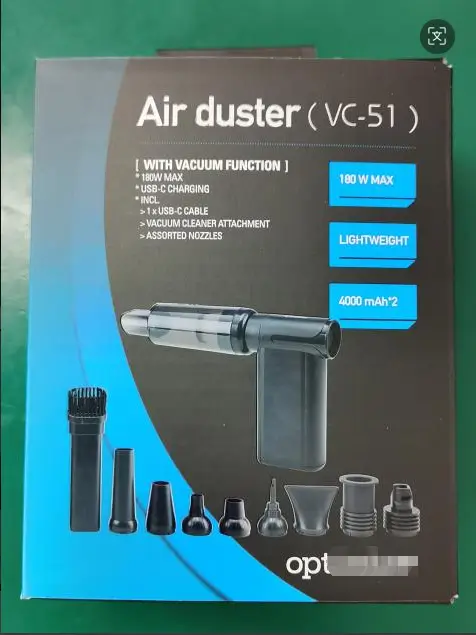
Packaging design is completed using buyer supplied AI or PDF files. The factory arranges packaging samples based on approved artwork before mass printing. This step helps verify layout, color accuracy, and text content, reducing the risk of errors during large scale production.

Step 2: Production Execution Stage in the OEM Process (2–3 Weeks)
The production execution stage is a core part of the cordless car vacuum cleaner OEM process. During this phase, all materials are prepared and verified to support stable assembly and consistent product quality.
2.1 Material Sourcing and Incoming Quality Inspection
Core component sourcing
Key components such as motors, batteries, and filtration elements are sourced according to confirmed technical specifications. These components directly affect suction performance, battery life, and overall product reliability, making supplier selection and specification control essential.
Auxiliary material preparation
Supporting materials including plastic resin, internal wiring, switches, and connectors are prepared in advance to match the production schedule. Proper material coordination helps avoid delays and ensures smooth production flow on the assembly line.
Incoming Quality Control (IQC)
All incoming materials are inspected under IQC procedures before entering production. This includes checks on appearance, performance parameters, safety standards, and compliance requirements. IQC ensures that only qualified materials are used in the cordless car vacuum cleaner OEM process, reducing defect risk during assembly.
2.2 Production Line Assembly Process
The production line assembly process follows a standardized sequence to maintain quality and efficiency throughout the cordless car vacuum cleaner OEM process. Each stage is closely controlled to ensure stable performance and consistent output.
- Injection molding: Plastic components are formed through injection molding based on approved molds. This step determines the accuracy of housing structure, part dimensions, and overall fit, forming the physical foundation of the product.
- Housing surface treatment: After molding, the housing undergoes surface treatment such as spray coating or electroplating. This process improves appearance, surface durability, and color consistency according to branding requirements.
- Logo processing: Approved logo methods such as silk screen printing, laser engraving, UV printing, or molded logos are applied to the housing. Logo accuracy and alignment are checked before the next assembly step.
- Motor installation: The motor is installed into the housing according to fixed positioning standards. Proper motor alignment ensures stable suction performance and reduces vibration during operation.
- Circuit board soldering: The circuit board is soldered and connected to internal wiring. This step ensures reliable power delivery, charging safety, and stable electronic control during product use.
- Filter assembly: Filter components are installed to complete the airflow and dust separation structure. Correct filter placement supports effective dust collection and protects internal components.
- Final product assembly: All subcomponents are assembled into the complete cordless car vacuum cleaner. Assembly accuracy is checked to ensure secure fitting and proper alignment.
- Functional testing: Each unit undergoes functional testing to verify suction strength, power operation, noise level, and basic safety performance.
- Aging test: Products are operated continuously for a defined period to confirm long term performance stability and identify potential early failures.
- Cleaning and packaging: After testing, products are cleaned to remove dust and fingerprints, then packed with protective materials to prevent damage during storage and transport.
2.3 Key Quality Control Checkpoints
Quality control plays a critical role in the cordless car vacuum cleaner OEM process. Clear inspection standards help ensure consistent performance, reduce defect rates, and protect brand reputation in the Amazon marketplace.
Full inspection items
Every finished unit undergoes a full inspection covering product appearance, logo completeness, and basic functional operation. Inspectors check housing finish, logo clarity, button response, and power on performance to confirm that each unit meets visual and functional requirements.
Sampling inspection items
Sampling inspections are conducted based on defined quality standards. These tests include suction performance measurement, noise level testing, and battery runtime evaluation. Sampling helps verify overall production consistency while maintaining efficiency in large scale orders.
Safety and compliance testing
Safety related testing is conducted to meet certification requirements such as CE and RoHS. These tests focus on electrical safety, material compliance, and operational stability, supporting smooth customs clearance and platform approval in international markets.
Step 3: Packaging and Logistics Preparation (1–2 Weeks)
Packaging and logistics preparation is the final stage of the cordless car vacuum cleaner OEM process before shipment. Proper packaging helps protect the product, support brand presentation, and meet platform and import requirements.
3.1 Branded Packaging Preparation

Retail color box printing
Retail color boxes are printed using buyer provided design files in AI or PDF format. Artwork is reviewed and approved before mass printing to ensure correct layout, color accuracy, and branding consistency across all units.
Accessory packaging
Accessories such as brush heads, charging cables, and storage bags are packed separately to prevent damage and improve product organization inside the box. Clear accessory packaging also enhances the unboxing experience for end users.
Instruction manual printing
Instruction manuals are printed according to buyer requirements. Multi language versions can be produced to support different target markets and comply with local regulations. Manuals include usage instructions, safety information, and basic product specifications.
3.2 Outer Carton Labeling and Shipping Marks

Proper carton labeling is an essential part of the cordless car vacuum cleaner OEM process. Clear and compliant labels support efficient warehouse handling, customs clearance, and Amazon FBA acceptance.

- Outer carton design: Outer cartons are designed to include key shipment information such as product name, quantity per carton, gross weight, net weight, and carton dimensions. Clear carton markings help logistics partners and warehouses identify and handle shipments accurately.
- Amazon FBA labels: Amazon FBA labels are printed and applied according to Amazon requirements. These labels include FNSKU barcodes and shipment identification information, helping ensure smooth receiving and tracking at Amazon fulfillment centers.
- Country of origin labeling: Made in China labels are applied to meet import regulations in destination markets. Proper country of origin marking helps avoid customs delays and compliance issues.
- Environmental and battery labels: Required environmental labels such as WEEE symbols and battery markings are applied based on market regulations. These labels support regulatory compliance for electronic products and battery powered devices.

3.3 Pre-Shipment Preparation
Pre-shipment preparation is the final checkpoint in the cordless car vacuum cleaner OEM process before goods are released for delivery. This stage helps confirm product quality, shipment accuracy, and export readiness.
Final inspection based on AQL standards
A final inspection is conducted using AQL sampling standards. Inspectors verify product appearance, functionality, packaging accuracy, and labeling compliance. This inspection confirms that the shipment meets agreed quality requirements before dispatch.
Photo documentation and record keeping
Photos are taken and archived at key stages, including finished products, retail packaging, outer cartons, and container loading. These records provide transparency for buyers and serve as reference materials for quality tracking and order confirmation.
Export document preparation
All required export documents are prepared prior to shipment. These typically include the commercial invoice, packing list, and certificate of origin. Complete and accurate documentation supports smooth customs clearance and reduces the risk of shipment delays.
Special Advice for Amazon Sellers
Choosing the Right Minimum Order Quantity
For new sellers just entering the cordless car vacuum cleaner market, it’s recommended to start with a minimum order quantity of 1,000 units. This quantity meets most factories’ minimum order requirements while effectively reducing the risk of inventory accumulation, allowing you to test market response and adjust your strategy based on actual sales performance. For established sellers who have already gained a foothold in the market, consider increasing your order volume to 3,000-5,000 units or more. This approach not only secures better unit pricing but also ensures sufficient inventory during peak seasons, preventing stockouts that could negatively impact your sales ranking and account performance.
Certification and Compliance
Before confirming orders with factories, it’s essential to understand the certification requirements for your target markets. Products sold in the European market require CE certification, the US market needs FCC certification, and ROHS environmental certification is a basic requirement for most developed country markets. Beyond these international certifications, carefully review Amazon’s specific requirements for the cordless car vacuum cleaner category, including product safety standards, packaging labels, and instruction manual content. When selecting suppliers, prioritize factories with existing certification experience, as this can significantly reduce your time-to-market. Additionally, purchasing product liability insurance is a necessary protective measure that not only provides risk coverage for your business but is also a mandatory requirement in many markets and platforms.
Time Planning Essentials
Proper time planning is one of the key factors for Amazon seller success. From confirming product design, sampling, mass production, to final shipment, the entire process typically takes 4-5 weeks. On top of this, you need to allocate an additional 2-3 weeks for sea freight if your target market is the US or Europe. It’s particularly important to note that during peak seasons each year (such as mid-year promotions, Black Friday, and Christmas season), factories often experience severe order backlogs, and production cycles may extend by 1-2 weeks or even longer. Therefore, it’s recommended to plan your inventory at least 2-3 months in advance, especially placing orders early before peak seasons to avoid missing golden sales opportunities. Establishing a detailed timeline that includes estimated completion times and buffer periods for each stage will help you better manage your supply chain.
Cost Control Strategies
While maintaining product quality, there are several practical cost control strategies that can significantly reduce your procurement costs. First, try to use the factory’s existing molds, which can save thousands or even tens of thousands of dollars in molding fees—a substantial expense for new sellers. Second, when selecting product colors, standard colors like black and white typically cost 10-15% less than custom colors because these are materials factories regularly stock. Third, smart packaging design not only protects your product but can also effectively reduce logistics costs—by optimizing package dimensions to minimize wasted space, you can reduce dimensional weight and save considerable international shipping costs and Amazon FBA storage fees. It’s advisable to work closely with the factory’s packaging engineers to design the most compact and efficient packaging solution while ensuring product safety. Remember, every dollar saved in costs means an additional edge in pricing competitiveness or profit margin in Amazon’s highly competitive marketplace.


